Botulax
Origin and manufacturer
Botulax is a medical product containing botulinum toxin type A developed by the South Korean company Hugel, Inc. According to Hugel, the product was launched in Korea in 2010 (it had already been launched in Japan in 2009) [1][2]. In 2016, Botulax became the leader of the botulinum toxin market in South Korea, achieving the highest sales in the country [3]. Hugel reports that by 2012, the product had been registered in at least seven countries (including Thailand, Colombia, and Chile) and is also known under other trade names (e.g., Regenox, Zentox) [2]. The name “Botulax” comes from the word botulinum, referring to the active botulinum substance.
Composition and form of the preparation
The active ingredient in Botulax is botulinum toxin type A (a modified protein complex with a molecular weight of approximately 900 kDa) derived from the bacterium Clostridium botulinum, strain CBFC26 [4][5]. The preparation is supplied as a sterile, lyophilized (dried) powder intended for dissolution in saline solution before administration [5]. The manufacturer’s documentation indicates that the protein content (<5 ng in a 100 U vial) and endotoxin residues are at very low levels (e.g., <1.0 EU endotoxin units in 100 U) [5]. The manufacturer also emphasizes special purification steps (e.g., removal of nuclease residues) to reduce immunogenicity and adverse reactions [6].
Available doses and packaging
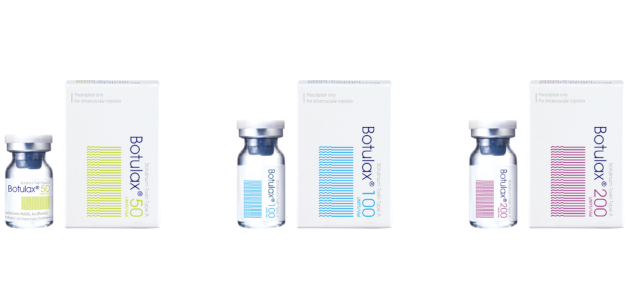
Botulax is offered in disposable vials of several standard capacities: usually Botulax 50, Botulax 100, or Botulax 200 units (U) of powder for dissolution. Versions of 150 U and 300 U are also available. Before injection, the vial should be dissolved in saline (according to the manufacturer’s leaflet) and used as a basis for preparing a subcutaneous/intramuscular injection. An example of the recommended dosage in aesthetic treatments is 20 U for the glabella (lion’s wrinkle) area, divided into 5 injections of 4 U each [7]. This allows for precise distribution of the toxin. The vials are stored in a refrigerator (2–8°C), and the product is usually valid for 24 months from the date of manufacture [5].
Aesthetic applications
Botulax is primarily used in anti-wrinkle treatments. It smooths out expression lines on the forehead (horizontal), frown lines (vertical lines between the eyebrows), and crow’s feet around the eyes, which are caused by the contraction of facial muscles. The product also eliminates lines around the mouth and tear troughs, reduces cheek muscle tension, and can be used for facial contouring (so-called Botox facelift). In aesthetic practice, Botulax is also used to model the shape of the jaw (by reducing the masseter muscle to optically slim the face) and to reduce horizontal neck wrinkles (so-called Venus rings).
The preparation improves the appearance of the eyes by treating mild inflammation of the eyelids (blepharospasm) and reduces contracture of the upper lip depressor muscle, which in turn corrects the shape of the mouth. Another important application is the treatment of excessive sweating (hyperhidrosis) in the armpits or palms – the toxin blocks nerve conduction to the sweat glands.
Medical applications
In addition to aesthetic purposes, Botulax has broader medical applications, similar to other botulinum toxin products. It is used in the treatment of chronic migraines (relaxing the muscles surrounding the cerebral vessels) and cervical dystonia (neck spasm) [11]. It helps in the treatment of bruxism (excessive teeth grinding) and facial muscle tension (e.g., in paralysis)[11]. In addition, Botox products help alleviate the symptoms of overactive bladder (difficulty holding urine), as well as treat migraine headaches and eyelid spasticity (blepharospasm) [11] [12]. The medical indications are similar to those for the famous Botox® preparation – the difference lies mainly in the legal basis for approval, rather than in the different effects of the toxin.
Comparison with other preparations
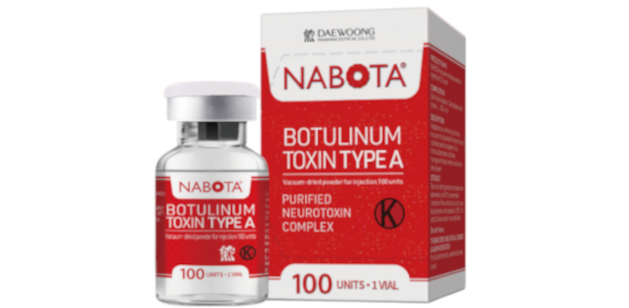
Botulax is considered competitive with other commercial botulinum toxins, especially those produced in Korea. In a survey of Korean dermatologists, only two preparations were more popular than Botulax (37.3% of aesthetic medicine was Dysport/Botox, 18.7% was Botulax, and 8.0% was Nabota/Jeuveau)[13]. Experts emphasize that the effectiveness of Botulax is sometimes rated as comparable to classic Botox® (Allergan), while the cost of Botulax treatments is usually lower (better price-to-effect ratio)[14]. Laboratory studies have even shown that Botulax has a higher potency per unit of preparation than Botox/Vistabel[15]. Compared to other Korean toxins (Coretox, Innotox, Neotox, Nabota), Botulax stands out, among other things, for its powder form, which allows for flexible dosing, and its reputation for safety and effectiveness [16][17]. However, it requires precise preparation (dissolution), which distinguishes it from, for example, the pre-diluted Innotox preparation.
Action and duration of effect
The therapeutic effect of Botulax appears rapidly. The first effects are usually visible after about 3–7 days after injection, and the full effects are visible within 1–2 weeks (as with other BoNT-A preparations)[17]. The effect lasts for an average of 3–6 months, although in some patients it may be shorter or longer (depending on the dose administered and individual metabolic characteristics)[17]. After this time, it is recommended to re-administer the toxin to maintain the result.
Clinical trials and safety
In clinical trials, Botulax has demonstrated efficacy and a safety profile comparable to that of Botox. In a controlled phase III trial, the preparation (under the name letibotulinumtoxinA) was evaluated for the smoothing of deep frown lines. After 4 weeks, 89.3% of patients treated with Botulax achieved a marked improvement (scale 0–1), while 81.9% achieved a similar effect after Botox[4]. The difference was not statistically significant, confirming that Botulax was not inferior to onabotulinumtoxin (Botox®)[4]. At the same time, the incidence of adverse events was comparable – approximately 9.0% in the Botulax group vs. 11.7% in the Botox group[18]. The manufacturer also boasts additional purification of the preparation (removal of nucleases and other residues), which is supposed to reduce the risk of antigenicity and irritation[6]. All approvals of this type of preparation (including Botulax) are based on evidence that it is safe when used correctly.
Expert opinions and legal regulations
As Botulax is introduced to new medical markets, experts are highlighting its advantages. During a presentation to doctors in the United Arab Emirates (2025), Dr. Erik Koppert (a renowned Australian specialist) presented clinical results and emphasized the high efficacy and safety of Botulax[19]. The attention was drawn to the recent approval of the product by the US FDA (in 2024), which proves that its quality standards comply with the highest norms[19]. In Southeast Asia, doctors also have a positive opinion of Botulax. For example, in Thailand, the product has been imported by large medical companies and has gained popularity in cosmetic clinics thanks to its good value for money[20].
Formally, Botulax (as letibotulinumtoxinA) is approved for use in the EU – in 2022, Croma-Pharma GmbH successfully completed the European registration process for Letybo® (the same active ingredient as Botulax) for the treatment of frown lines[21]. Similarly, it has been registered in Canada and other countries around the world. All these evaluations and certifications prove that Botulax meets international requirements for the efficacy and safety of aesthetic preparations.
Sources:
[1] [3] Our Approach – Hugel Aesthetics – Cosmetic Expertise
https://hugel-aesthetics.com/our-approach/
[2] [5] shop.medsupplysolutions.com
[4] [6] [7] [18] A Phase-III Noninferiority, Randomized Controlled Trial of Letibotulinum Toxin A for the Improvement of Moderate-to-Severe Glabellar Wrinkles in China – PMC
https://pmc.ncbi.nlm.nih.gov/articles/PMC10781123
[11] [12] Botulax: The Next Generation of Botulinum Toxin | Korea Filler Experts
https://koreafillerexperts.com/botulax-the-next-generation-of-botulinum-toxin/?v=dc634e207282
[13] [14] [15] [22] An Update on the Cosmetic Use of Botulinum Toxin: The Pattern of Practice among Korean Dermatologists
https://www.mdpi.com/2072-6651/14/5/329
[16] [17] Botulax vs Innotox – A Thorough Comparison of Toxin – DoctorMedica
https://www.doctormedica.co/blog/botulax-vs-innotox
[19] HUGEL
https://www.hugel-inc.com/pr-en/recrqtEETlp6VyDrC
[20] Botox – Dr. Siriporn Aesthetic
https://www.drsiriporn.com/botox/
[21] Home – Aesthetics for a Modern World – Hugel Aesthetics